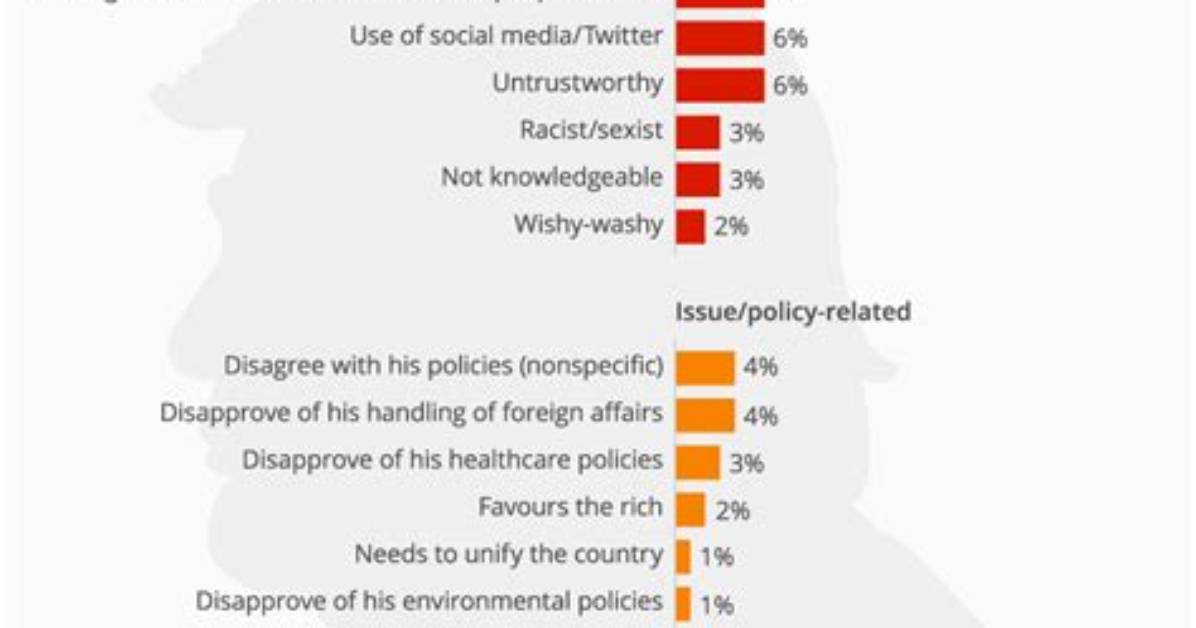
**Ever wondered why Donald Trump is such a polarizing figure?** The name alone sparks debates, strong opinions, and sometimes even heated arguments. Whether you love him or hate him, there's no denying that the former president has left a significant mark on American politics and society. In this article, we'll dive deep into the top reasons people dislike Donald Trump, exploring both his actions and the broader societal implications. So grab your coffee, settle in, and let's break it down!
Donald Trump is one of the most talked-about personalities in recent history. Love him or not, his presidency brought the spotlight back to issues that many had ignored for years. But with great attention comes great controversy, and Trump has faced no shortage of criticism from all corners. From his leadership style to his communication methods, there's plenty to unpack.
Let's be honest—this isn't just about politics. It's about understanding the factors that shape public opinion and how they reflect larger societal trends. Whether you're a die-hard supporter or someone who can't stand his policies, this analysis aims to shed light on the reasons behind the dislike. Ready? Let's go!
Donald Trump's Polarizing Leadership Style
One of the primary reasons people dislike Donald Trump boils down to his leadership style. Unlike traditional politicians, Trump operates with a brash, uncompromising approach that often rubs people the wrong way. His tendency to prioritize his own agenda over bipartisan cooperation has alienated many voters across the political spectrum.
For instance, critics argue that Trump's "my way or the highway" attitude stifles constructive dialogue and collaboration in government. This rigidity often leads to gridlock, making it difficult to pass meaningful legislation that benefits the general public. While some see his decisiveness as a strength, others view it as a major flaw in his leadership.
Key Traits That Shape Public Perception
Here are some key traits that contribute to the negative perception of Trump's leadership:
- Authoritarian tendencies: Many critics believe Trump exhibits authoritarian behavior, often dismissing dissenting voices and undermining democratic norms.
- Lack of empathy: His communication style frequently comes across as cold and unsympathetic, especially during crises like natural disasters or pandemics.
- Unpredictability: Trump's impulsive decision-making has led to numerous controversies, leaving many questioning his ability to lead effectively.
These traits, combined with his unorthodox approach to governance, have created a polarizing image that resonates strongly with both supporters and detractors alike.
Controversial Policies and Statements
No discussion about Donald Trump would be complete without mentioning his controversial policies and statements. From immigration to climate change, Trump's approach to key issues has sparked widespread backlash from various groups.
Take, for example, his travel ban targeting predominantly Muslim countries. Critics argue that this policy not only perpetuates Islamophobia but also undermines America's commitment to diversity and inclusivity. Similarly, his stance on climate change, including his decision to withdraw the U.S. from the Paris Agreement, has drawn criticism from environmentalists and scientists worldwide.
Breaking Down the Impact
Here's a quick look at some of the most controversial policies under Trump's administration:
- Immigration policies: Family separations at the border and the termination of DACA have drawn widespread condemnation.
- Climate change denial: Trump's skepticism toward climate science has led to significant setbacks in global efforts to combat environmental degradation.
- Healthcare reform: Attempts to repeal the Affordable Care Act (Obamacare) have been met with resistance from those who fear losing access to affordable healthcare.
While these policies may appeal to certain segments of the population, they have undoubtedly contributed to the growing resentment toward Trump among others.

